Friday, November 16, 2018

laughtrip


My unforgettable funny moments is that i am with my friends looking for
mango, sweet sweet mango that we are the only ones that know its 
location because of our thirst of mango we travel a distance that is far away 
from our home and enjoying while we travel and discovering new things
it feels like an adventure that i cannot forget when i was a kid,
as we approaching to our destination there was a pit in our path 
and planning to jump over it, after we jump over the our last friend has left
afraid that he might fall into the pit and we encourage him that he can do it
until he actually jumped and fall into the pit because of our one jerk friend 
that scares him when he jump, he gets wet and we laugh so hard that our
stomach hurts and he avenge us with mud in his hands trying to stain our shirt.

and until we approaches to the mango tree and we climb into the top and we eat
mangoes at the top of it and bring some for our parents or even selling it so we can
play computer games, but the mango has a price that we can't forget there was a
hive full of wasp we didn't saw the hive as we climb to the top until one of our friends
at the bottom saw the hive and warned, we though that he was joking until we saw it with
our own eyes and the wasp was attacked us and jumped like 2nd floor high and run.
as we run away fast, the wasps follows us until we jumped together into the water.
and we agreed that we never comeback to that place again, we shared our moments 
to my other friends and laughing while we talked about it.


Monday, November 12, 2018

i am something

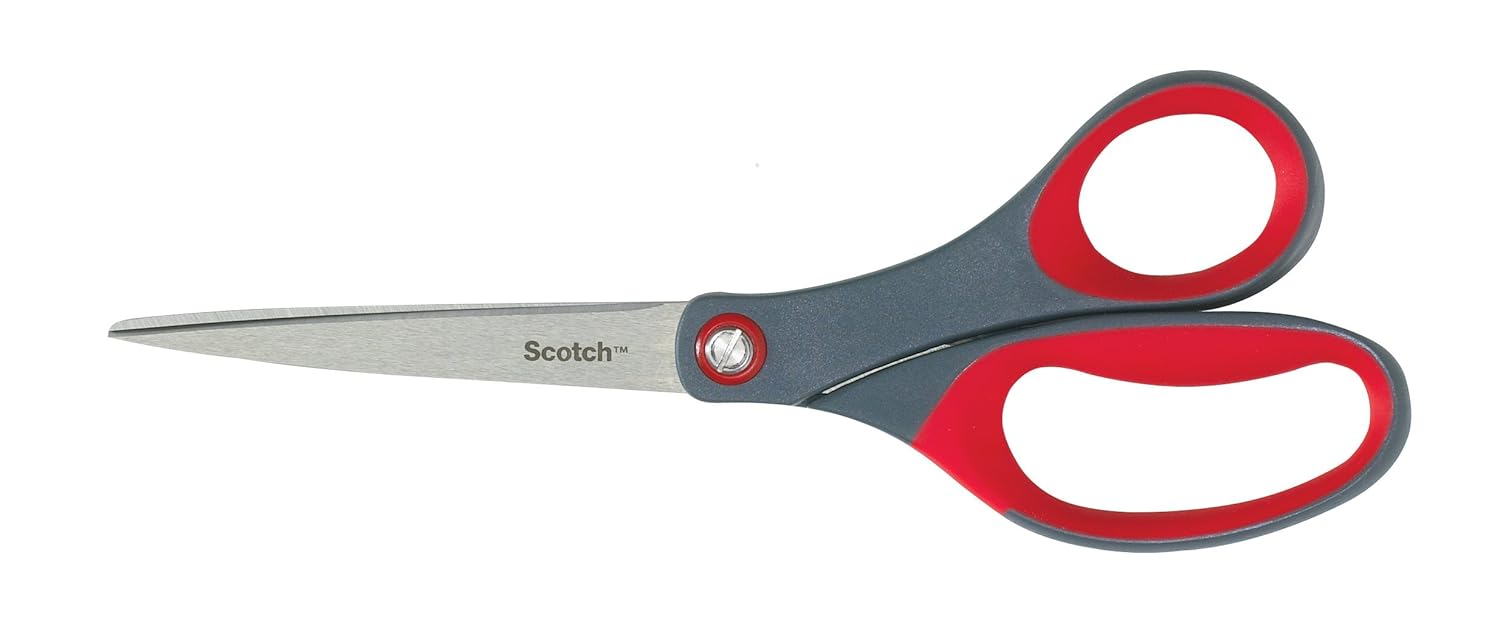
Image result for scissors
I want to become a scissor, because I want to cut the pain away
the experience that hurts me everyday
the trick is for the blades to learn to work smoothly together
and cut the day that hurts me forever
A witty vicar once said that a good marriage is like a pair of scissors
yet always destroying anyone who delivers
When you make and drape clothing, the scissors are your tool
it's so complicated i cant understand its vital rule

the scissors can cut what you want, and it is very useful
and it is the only tool that it is truthful
there is a day that i am confused
that someone is only using me to be abused
and now i am very careful of what i act
and be very careful of people that they want you to cracked
and only forget the hurtful moments of your life
and find your forever wife.


diction

Diction is important in conveying the appropriate message to our audience. It allows you to use the right words at the right time and avoid using the wrong wording.

Vocabulary plays a key role in establishing style, tone and the credibility of a writer. You must use appropriate words in writing to convey thoughts clearly. Diction is the overall choice of language, or words, for your writing.It plays a significant role in the quality of your writing. Style in writing is as important as substance. Poor style and tone impede effective communication.

Diction refers to one's choice of words. Words can trigger feelings or emotions that may draw attention away from their literal definitions. For example, a ''loser'' is someone who does not win in a competition. However, the word also carries the implication of being worthless. Using the word ''loser'' in the wrong context could cause insult or hurt feelings.
Whether writing political speeches or children's books, authors need to choose words carefully to ensure their messages are appropriately understood. They need to consider the culture, context, and intellectual level of their audience, and which words would appeal to them most. Authors also craft their sentences using words that convey the appropriate tone, sound, and style. Carefully chosen words promote flow in writing.

figures of speech

Figures of Speech

Language can be used in two ways – literally and figuratively. Literal language is direct and uses the real definition and meanings of words and phrases. But when we talk figuratively, the meaning of any word/phrase will depend on the context in which they are used. A figure of speech relies on such figurative language and rhetoric.
When using figures of speech the words will diverge from their literal meanings, to give a more stylized and specialized meaning to these words. Let us take for example the phrase”fast like lightning”. This phrase merely implies great speed, it does not mean literally as fast as lightning. Example: “On hearing the school bell the kids ran out of the class as fast as lightning”. 

Types of Figures of Speech

Now there are dozens of types of figures of speech. But here we will be focussing on the five main ones we use in our daily prose.

1] Simile

A simile is a figure of speech that uses comparison. In a simile, we use two specific words “like” and “as” to compare two unlikely things, that actually have nothing in common. This is done to bring out the dramatic nature of the prose and invoke vivid images and comparisons. It is one of the most common forms of a figure of speech and is used in everything from day-to-day talk to poems.
Let us see some examples of simile. “She is as brave as a lion”. Here you will notice a girl and her bravery are being compared to a lion. this is an unusual and illogical comparison, but it brings out the vivid imagery and lyrical quality in the sentence. The literal sentence would have read “She is brave”, but using the simile makes it sound much better. Other such examples can be
  • quite like a mouse
  • as tall as a mountain
  • as strong as an ox
  • precious like an angel

2] Metaphor

A metaphor and a simile are quite similar actually. A metaphor also uses compares to things that are in no way similar. It does so to bring out the symbolism. A metaphor is a word or phrase used to show its similarity to another thing. It helps to explain an idea, but if you take a metaphor at its literal meaning it will sound absurd.
An example of a metaphor is “Alex is a chicken”. Literally, this sounds so very absurd. But this is a metaphor which suggests that Alex is a coward, or frightened. It compares or implies that Alex is a chicken to bring out the symbolism. Some other examples are ‘love is a battlefield”, “all the world’s a stage”, “that technology is a dinosaur” etc.
While a simile and metaphor seem to be very similar, there is one basic difference between the two. In a simile, the comparison happens with the help of the words “as” and “like”. A metaphor will not have either of those two words.

3] Personification

Another very interesting figure of speech is personification. In this, we personify or represent a non-human entity as human. We give an inanimate object or an intangible idea of some human qualities such as emotions, or gestures or even speech. this is done to portray the object as alive and help the listener or reader paint a vivid picture. Again, if we take the words at their literal meaning they will sound absurd.
“The wind howled as the storm grew stronger”. Here we have taken an object, the wind, and personified it as a living thing by claiming it howled. Other such examples could be, “time ran away from him”, “the boat danced in the puddle”, “the car died in the middle of the road” etc.

4] Hyperbole

Hyperbole in the Greek language translates to ‘excess’. And that is what it does, it exaggerates. We use hyperboles to emphasize the importance or the overstate something. This exaggerates claims and statements are never meant to be taken at their literal meaning. They are used to create a strong and lasting impression
An example would be “Since he has been away from home he has gotten as thin as a toothpick“. Obviously, he has not gotten as thin as a toothpick, we only exaggerate to emphasize on how thin he has become. Some other examples are, “Those shoes cost a king’s ransom”, “For the millionth time, clean the kitchen”, “his grandfather is older than the hills”.

5] Onomatopeia 

This is a figure of speech where words or phrases indicate sounds. Often to bring about more imagery and better describe a setting, authors use words to involve all five of our senses. Onomatopeia refers to those words that imitate the sounds of an object or person.
For example “The bees buzzed around in the garden”. Here the word ‘buzzed’ is indicating the sound coming from the bees. Some other examples are “the leaves were rustling”, “the door was squeaking”, “he closed the book with a thud” etc.

imagery

There are seven distinct types of imagery: visual, auditory, olfactory, gustatory, tactile, kinesthetic and organic. Many of these deal with the five senses, which all work together to help us create mental images of whatever we are reading.


Visual
Visual imagery appeals to the sense of sight, and plays the largest role in imagery in literature. It describes what a scene or character looks like. If an author writes something such as, “The deep blue hues of twilight were reflected in the still water; the slight glint of moonlight peeked through the clouds just enough to make out the silhouette of a passing ship”, the reader can imagine a still, ocean scene at twilight as if they were standing on the edge of the water themselves.
Auditory
Auditory imagery describes specific sounds that are happening within the story. This can be something like, “The rooster crowed at early dawn, a sign that it was time to start the day. John woke up, listening to the quiet murmurs of his children in the kitchen below; the clang of pots and pans signaled that breakfast was almost ready”. Can you hear the rooster? Are you imagining the clanging of pots and pans? How does this auditory imagery assist in your overall mental image of the scene? Even though the imagery here describes particular sounds, I’m imagining a man waking up in a quaint room in a log house and a rooster crowing at sunrise over a bright green field.
Auditory imagery could also appear in the form of onomatopoeia. Words such as “bang!” “achoo!” “cacaw!” all work to describe sounds that most people are familiar with.
Olfactory
Olfactory imagery describes a particular scent. Let’s say you’re about to bite into a warm, steaming plate of maple smoked bacon. How would that smell? An author may describe it as, “The sweet scent of maple wafted through the room, causing Stephanie to stop what she was doing and sniff the air. A second waft of scent carried the underlying smoky scent of bacon; a scent only bacon straight off the grill could have”. Is your mouth watering yet? Are you itching to get off of the computer and go cook up some bacon? Authors want you to be able to almost smell the scent coming off the pages. Describing the scent of a particular food can also help readers imagine how that food tastes, which brings us to the next type of imagery.
Gustatory
Gustatory imagery pertains to the sense of taste. Let’s say a fictional Jason is about to bite into a delicious cupcake, smothered in chocolate frosting. This experience may be described as, “Jason took one look at the cupcake in front of him and couldn’t wait another second – he stuffed it right into his mouth. The rich, sweet, sugary taste of chocolate ran over his taste buds as he chewed and swallowed the whole dessert in less than ten seconds”. I don’t know about you, but I’m really craving some chocolate now.
Tactile
Tactile imagery appeals to the sense of touch. The feeling of a nice fuzzy blanket on a cold night, the smooth underside of a snake, the rough texture of tree bark. Anything you can touch can be described through imagery. The description of a bare hand on a mound of snow could be described as, “Sarah placed her bare hand on the cold snow. It was wet at first, then the frigid cold set in like a thousand needles, all pricking her palm at once”.
Kinesthetic
These last two types of imagery extend beyond the five senses. Kinesthetic imagery deals with the movement or action of objects or people. An example of kinesthetic imagery could be, “The birds flapped their wings in excitement, the promise of food so close. They sprung out of the tree, one by one, soaring through the branches and swooping down low to the pile of berries beneath the tree”. The flapping of the wings and the description of the way the birds fly down towards the ground helps the reader create an accurate visual image of the scene.
Organic
Organic imagery is the most difficult form of imagery to write, because it deals with creating a specific feeling or emotion within the reader. Phrases that make the reader feel sad, fearful, nostalgic, elated, even lost are all extremely effective organic imagery. Have you ever read a book that made you question your entire existence? Some authors have such a way with words that one simple sentence can resonate with you for years. A quote from Haruki Murakami has stuck with me for quite a while:
Source: blog.udemy.com

Uniqueness of creative writing

Creative writing is written to entertain and educate. We enjoy reading novels and stories, not because they are necessary to read or helpful for us, just because we get a certain pleasure from reading them, the pleasure which can’t be got from reading technical writing.
Creative writing has so many genres and sub-genres that they deserve a whole section of an article for themselves. It sometimes follows a given set of rules, and sometimes throws caution to the winds and breaks all of them. Either way, talent is somewhat of a necessary ingredient if you want to write creatively. Of course, writing can be improved by practice. But if you don’t have the necessary talent, your writing would not give pleasure to anyone.
Skills and talent both make up creative writing. Hence, they are its constituents.
Technical writing is wholly written to inform and sometimes to trigger the person reading into making an action beneficial to the one of the writer. Whoa, what a mouthful. That’s not a subject I’m going to cover here (copywriting), but if you want to know more about it, you can visit the master of its game, Copyblogger.com.
I already gave the examples of technical writing in the first post of the series. If you look at them with the context of copywriting, they make much more sense. Copywriters are some of the highest paid writers, says Copyblogger. Sales letters, pitches, advertisements, etc constitute copywriting.
Technical writing is not written to entertain. It has its own set of rules, conventions, do’s and don’ts, masterpieces and pieces of rubbish. There is a whole art to mastering technical writing, although it too is branched: online technical writing and offline technical writing. Personally, I think that if you want to master technical writing, you should first master concise and magnetic writing that draws the reader in, regardless of whether it’s creative or technical.
Are you a master or a learner of concise writing? If you are, so am I, and I’m going to cover it here in future posts. Creative leads or hooks contribute to it.
Journalism is the activity of gathering, assessing, creating, and presenting news and information. It is also the product of these activities.
Journalism can be distinguished from other activities and products by certain identifiable characteristics and practices. These elements not only separate journalism from other forms of communication, they are what make it indispensable to democratic societies. History reveals that the more democratic a society, the more news and information it tends to have.

why do i need to study creative writing

All writing is creative to some extent, no matter how technical or dull your subject. In fact, it can be an art in itself to transform a boring news release or academic article on, say, industrial filters into something engaging and readable.
There are many ways that you can define creative writing but to me it is a form of expression; it isn’t simply functional. It aims to entertain, to move, to inspire, to become art.
Creative writing can encompass fiction, poetry or scripts, basically anything that focuses on narrative, character development or literary themes and aims to elicit an emotional response from the reader.
When you write creatively, you are telling your audience a story, you are asking them to believe in the world and characters that you have created, to invest their time in these imagined lives.
Some people believe that the ability to write is an innate talent that a person is born with. Others would argue that the only way to become a good writer is to work hard, practice and constantly refine your work.
But everyone needs help and everyone, without exception, could be better at their craft. No matter how beautiful your prose, how well plotted your narratives or how realistic your characters are, there is always room for improvement. It’s something that we should always strive for.
There are plenty of places that can provide guidance to an aspiring writer: handbooks, local book or writers’ groups, library workshops, mentoring schemes, regional agencies, online courses or academic degrees.
It can be hard to choose, but the key is to define what you need to support and improve your writing.
Writing can be an isolating career and one of the most valuable aspects of undertaking a writing course can be finding like-minded people to encourage, assist and evaluate your work.
Taking a course in creative writing can be the spur that inspires the student to become a fully fledged writer, something they may only have dreamed about previously.
Of course, studying for a degree doesn’t guarantee you publication and the cost will be prohibitive for some. But if you’re struggling to move forward with your writing career, seek out the right group or mentor for support and your creative side will flourish.

Source: http://www.tenpennydreams.com